Capacitor/How it works
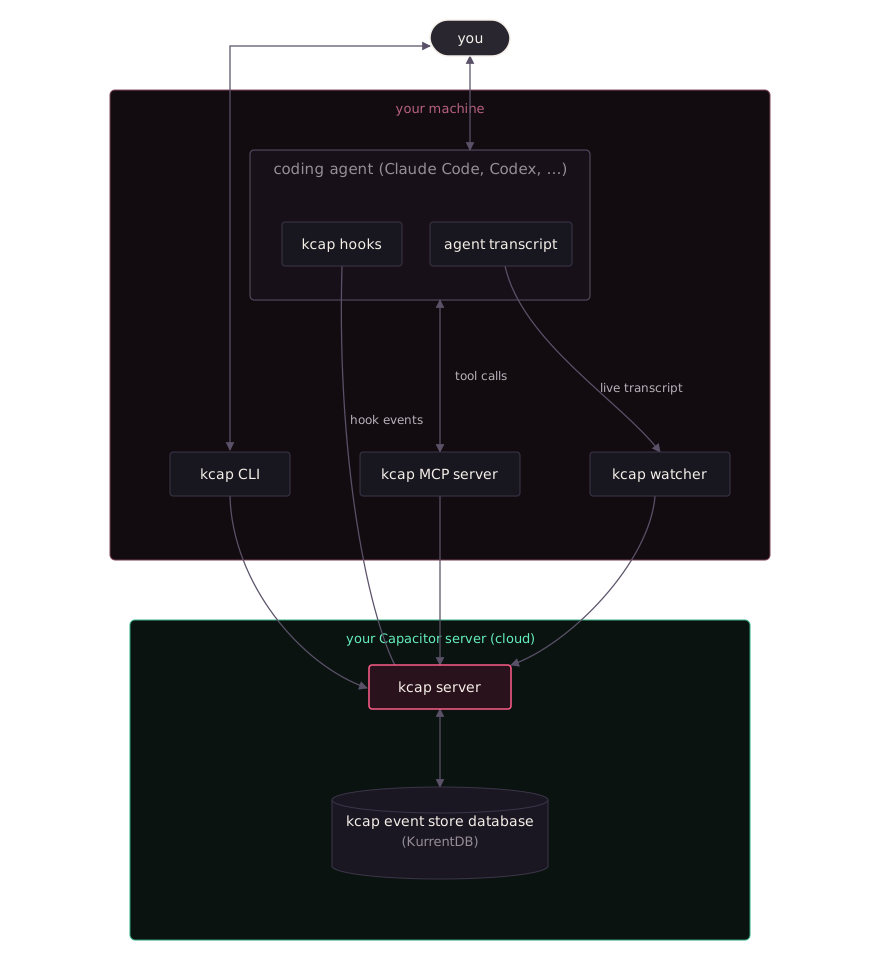
Capacitor records each coding-agent session as a durable event stream, then turns it into memory your whole team can draw on. Here’s the machinery: what runs on your machine, what runs on your server, and how one session travels between them.
Two moving parts
On your machine
The Capacitor client is source-available — you can read every line. It installs hooks into the coding agents you choose, and a background watcher tails each agent’s own transcript file and streams it to your server as the session runs — without changing how you work.
Your Capacitor server (cloud)
A Kurrent-hosted cloud instance, dedicated to your organization. It receives the session transcript, stores each session, and builds the data models behind the dashboard and search — then answers your agents’ queries against them.
Go deeper
For what a recording contains, where it goes, and who can see it, see Security. For the exhaustive, field-by-field list — and the exclusions and controls in full — read What Capacitor captures, System architecture, and Visibility & sharing.
Start free in minutes. Capacitor records what your agents actually did — for your team to replay, audit, and discuss. Nothing about how you work changes.
Rather start a conversation? Talk to the team — we’re building with teams that already use coding agents.
Built by the team behind KurrentDB — event streams in production are what we do. Coding agents just produce a new kind.